The work of the Commissions
The Law Commission and Scottish Law Commission are independent bodies, established to review existing law and make recommendations for reform.
The work relating to surrogacy undertaken by the Law Commissions began in 2017, when surrogacy was included in the 13th Programme of Law Reform. The mandate for the law to be reviewed was high, with surrogacy receiving the most responses of all projects proposed in the Programme.
After a period of pre-consultation work, the consultation paper, Building families through surrogacy: a new law, was published in 2019 with the period of consultation lasting for 4 months. Within the consultation paper, various provisional proposals were put forward, with consultees having the opportunity to directly respond to whether they agreed with the proposals.
There have been several delays to the final report and draft bill being published, indicating the complexity of the legal issues involved, but also reflecting some significant events and developments in the law that have occurred since the consultation paper was launched.
It has now been confirmed that the Law Commissions will publish the final report and draft bill on Wednesday 29th March. It is not yet known whether the provisional proposals from the consultation paper will be reflected in the final recommendations. There were some key changes to the law that were suggested which would go a far way to overcome some of the criticisms of the existing law, and it can be hoped that the central themes of the provisional proposals have made their way into the final report.
A key provisional proposal: legal parenthood
The consultation paper was extremely thorough, at 475 pages and with 118 consultation questions. It covered issues from court processes and payments to surrogates right through to employment law implications and access to information for surrogate-born children.
The overarching focus of the consultation paper, however, related to legal parenthood following surrogacy. In a previous post, it was explained that following a surrogacy arrangement, the surrogate (and potentially her spouse) will be the legal parent of the child until legal parenthood is transferred by way of a parental order. It was acknowledged that this does not align with the intentions of the individuals involved and may present challenges in relation to decision-making for the child.
The provisional proposal is to establish a new ‘parental order pathway’ which would allow intended parents to be treated as the legal parents from birth. The key aspects relating to the new pathway are:
- The intended parents would be the legal parents from birth, provided that the necessary pre-conception administrative processes and assessments have been followed (such as a written agreement, legal advice and implications counselling for all parties).
- The surrogate would retain the right to object after the birth for a defined period, which would then require the intended parents to apply for a parental order through the existing court process.
- Intended parents would only be eligible under the new pathway where the surrogacy arrangement has taken place within the UK. Those who engage with cross-border surrogacy would still need to apply for a parental order.
For those not eligible under the new pathway, the parental order process would remain in place, with some potential amendments to the existing eligibility requirements.
Other key provisional proposals
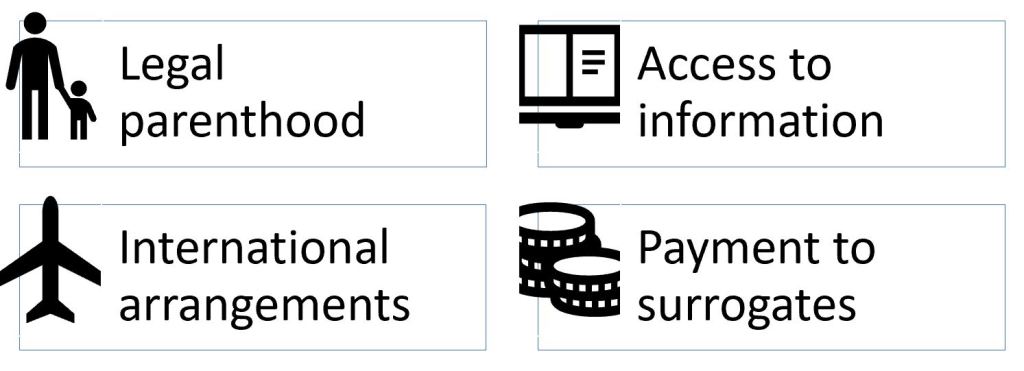
In addition to the provisional proposal amending allocation of legal parenthood, there were other provisional proposals or issues central to the consultation paper. These include:
- Establishing a national register of surrogacy arrangements to allow surrogate-born individuals to access information relating to the surrogate and any gamete donor.
- Providing recognition of legal parenthood established abroad where intended parents engage with surrogacy overseas and follow the legal processes in the country where the child is born. This would be on the basis that the UK is satisfied that the country in question has sufficient safeguards in place. There were further proposals relating to international arrangements, such as ensuring nationality and immigration rules support intended parents in being able to return to the UK with the child.
- Inviting views on how payments to surrogates should be regulated. No provisional proposals were put forward as a result of the divergent views on the issue. Instead, consultees were invited to provide their views on which categories of payment should be permitted, ranging from costs associated with the pregnancy, through to gifts and a fee for their role in acting as a surrogate.
The final report & draft bill
When the final report and draft bill are published next week, it will be possible to assess the extent to which the consultation, and subsequent work on the project, align – or not – with these provisional proposals.

 reforming surrogacy law
Leave a comment